
In today’s dynamic business landscape, the concept of Environmental, Social, and Governance (ESG) reporting has transcended from a niche concern to a critical imperative. As highlighted in “The Rise of ESG Reporting: What It Means for Businesses,” the numbers speak for themselves: global ESG assets soared to $30 trillion in 2022 and are projected to hit $40 trillion by 2023. This isn’t just a fleeting trend; it’s a fundamental shift in how businesses are valued and perceived.
The increasing awareness among consumers, investors, and employees about sustainability and ethical practices has put ESG reporting at the forefront of corporate strategy. A 2023 McKinsey and NielsenIQ study revealed that products recognized for their eco-friendly and socially responsible attributes experienced a 28% sales growth over five years, significantly outpacing products without such labels. This clearly demonstrates the tangible benefits of integrating ESG into your business model.
The Pillars of ESG: More Than Just Buzzwords
Understanding the core components of ESG is crucial for any business looking to navigate this new era effectively. ESG reporting is built on three fundamental pillars:
Environmental: This pillar addresses a company’s impact on the natural world, including energy consumption, carbon emissions, waste management, and resource utilization. Companies focused on environmental stewardship demonstrate a commitment to planetary health and reducing their ecological footprint.
Social: This dimension examines a company’s relationships with its employees, customers, and the wider community. Key areas include diversity and inclusion, employee safety and well-being, labor standards, and community engagement. Strong social performance fosters a positive reputation, attracts talent, and strengthens community ties.
Governance: This pillar focuses on a company’s leadership, internal controls, and overall decision-making processes. It encompasses board composition, executive compensation, risk management, and ethical compliance. Robust governance ensures transparency, accountability, and the long-term interests of all stakeholders.
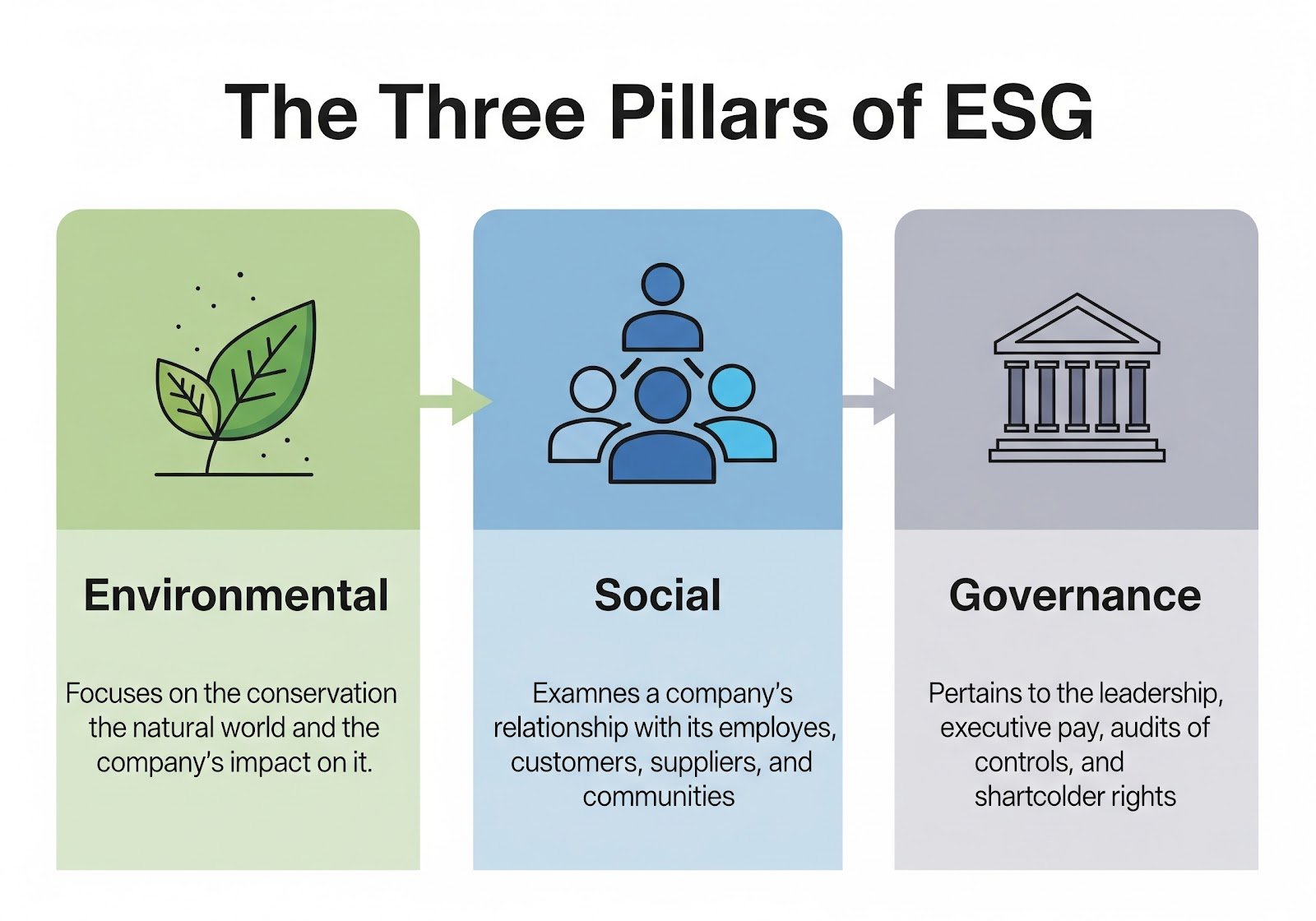
These three interconnected areas—environmental reporting, social governance, and corporate governance—collectively provide a comprehensive view of a company’s sustainability efforts and overall ethical standing.
ESG’s Growing Influence: From Voluntary to Mandatory
The evolution of ESG has been swift and impactful. What began as a voluntary initiative has rapidly become a business imperative, driven by a combination of regulatory pressure and stakeholder demands. Over 90% of S&P 500-listed companies now publish ESG reports, signifying widespread adoption.
The European Union’s Corporate Sustainability Reporting Directive (CSRD), which began in January 2023, is a prime example of the shift towards mandatory ESG disclosure. This directive will impact approximately 50,000 companies, with reporting rules coming into effect as early as 2024. In the U.S., the SEC is also pushing for greater transparency regarding climate risks.
These regulatory frameworks are not just about compliance; they are about fostering a more sustainable and accountable global economy. Companies that proactively embrace these standards will not only avoid potential penalties but also gain a significant competitive advantage.

The Bottom Line: How ESG Boosts Business Performance
The benefits of robust ESG reporting extend far beyond mere compliance and reputation management. Research consistently shows a strong correlation between sound ESG practices and improved financial performance. Studies indicate that ESG integration can match or even surpass traditional investment strategies.
Beyond financial returns, ESG reporting profoundly influences various aspects of business performance:
- Investor Attraction: Companies with strong ESG records are more appealing to environmentally and socially conscious investors, potentially leading to lower borrowing costs and increased capital.
- Consumer Loyalty: Consumers are increasingly choosing brands that align with their values. Transparent ESG reporting helps businesses demonstrate their commitment to sustainability, fostering trust and loyalty.
- Talent Acquisition and Retention: Employees, particularly younger generations, are seeking workplaces that prioritize ethical practices and social responsibility. A strong ESG profile can be a powerful tool for attracting and retaining top talent.
- Risk Management: Integrating ESG factors into risk assessments allows businesses to identify and mitigate potential environmental, social, and governance-related risks, leading to greater resilience and long-term stability.
In conclusion, ESG reporting is no longer an optional add-on; it’s a fundamental aspect of modern business success. By prioritizing transparency, accountability, and sustainable practices, companies can not only meet stakeholder expectations but also unlock new opportunities for growth, innovation, and lasting value creation. The future of business is undeniably green, ethical, and well-governed.